Ahh, the wonders of the student diet: noodles, pizza and pasta.
Well, well, would you be surprised to hear that you can in fact eat healthy and on a student budget? Yes, you might have to do a little of home cooking and grocery shopping. But trust me, the pros do indeed outweigh the cons. Cooking at home not only is cheaper but also improves your cooking skills (which you will need in the future) and is also great ‘chill time’.
Yes it’s true, sometimes we can’t be bothered and takeaway seems so much easier and more delicious. But as you discover the amazing world of home cooking, you’ll soon see that your own meals will turn out to be the easier, more delicious and even more exciting option.
As a student you want your food to be:
- Healthy + nutritious (for those hard working brain cells)
- Delicious
- Cheap
- Fast to make
Yes, it’s possible. And I’ve got a guide to show you how.
1. Make a very simple outline plan
In order to make your meals include all of the above, you do need to plan.
Start with your budget. How much money are you allocating to food? If you don’t know, set an estimate and try and guess how much would be enough per month. To give you a bit of an idea, mine is £100 a month shopping at Lidl (in literally every country).
Then, make a list of healthy cheap food that you like. Here are some examples:
- Beans
- Eggs
- Tomatoes
- Frozen veggies
- Pepper + onions
- Almonds
- Lentils
- Squash/pumpkin
- Oats
- Canned goods
- Yoghurt and cheese
- Quinoa
- Carrots
- Aubergine
- Kale
- Sweet potatoes and potatoes
Now you’ve got your budget and you’ve got your list of ingredients. Have no idea what to cook? Simply take one of the ingredients and put in Google: ‘x recipe’. So for example: ‘aubergine recipe’. You take a look round and see what looks simple and what you can combine with other ingredients (here are some cool recipes).
Barbara has a budget of £100 and has searched the internet for a nice recipe. She finds: Ratatouille pasta. ‘Hmmm very yummy’ she thinks. She wants to make it. We’re going to follow her journey to ratatouille pasta success.
Now you have a list and you know what you’re going to make. Time to go shopping.
2. Go shopping
The most important part of the shopping process is sticking to your budget. Don’t be tempted to buy useless stuff or food you don’t need. A trick many people give is to not go shopping when hungry. Just buy what you need and go.
Batch shopping is the most effective for busy students who like having it all at once. I normally like to do a big shopping once a week and then maybe small trips during the week. I take my backpack, put in some earphones and I’m off for 1 hour. It’s strangely relaxing.
Barbara is off shopping. She’s got her list of ingredients from the ratatouille recipe: some onions, tomato puree, vegetable stock, pasta, tomatoes, cream and some veggies. She also buys some extra ingredients for other cooking of the week: potatoes, olive oil, rice and frozen veggies. She goes to Aldi for the shopping and sticks to her budget of £25 a week. She’s kind of excited: ‘People will be awed by my amazing ratatouille pasta’.
3. The cooking
Once again, batching. Pick one day as your ‘cooking day’ and use it to cook the food for the week. Cook different ingredients and put them in tupperware, then during the week you can mix them up and have a proper meal. Here are some things that are easy to prepare for the week:
- Rice + pasta
- Cooked veggies
- Ratatouille (my life blood)
- Salad (could be potato, normal, etc)
- Soup
Food like meat, potatoes and eggs don’t really do well in tupperware in the fridge, so if you prepare those make them to eat that same day or the day after.
You prepare these and then get to mix them up during the week. At the beginning this may seem a little bland to you: soup and rice? Sounds boring. But as you cook more and more you’ll get better and you’ll try new recipes. With spices you can create a curry with your rice, with your eggs and mushrooms you can cook a quiche, with your ratatouille you can do some meat or fish now and then.
Barbara picks Sunday as her cooking day. She get the recipe and her pots and pans, puts on a bit of good music and gets to work. In her 2 hours of cooking she prepares her ratatouille pasta, some rice and potatoes with tuna and cooked veggies. That way she has several meals she can combine together. Her ratatouille pasta doesn’t turn out as great as she thought it would, but she isn’t discouraged. She knows improvement comes with practice.
4. Experiment
The fun part of cooking is experimenting. Trying new ingredients, new recipes and weird spices. It may be disgusting at first, but it won’t be next time you do it (e.g. my super pepper tomato soup).
And once you get a bit more confident, invite some friends over. Do some experimenting together and serve it - it’s great bonding time (and way cheaper than the restaurant).
Now, when I go shopping I don’t need to plan anymore. I usually buy the same stuff, and every now and then I see a weird vegetable and decide to experiment with this one (I now have this big round turnip looking veggie I have no idea what to do with). I use cooking as a ‘down time’. So although I also batch cook on the weekends, I’ll do some cooking in the middle of the week to chill and have a nice smell in the flat. Oh and did I mention I’m way better at cooking now?
Some great student budget meals:
- Soup - mushroom soup, pumpkin, lentil, tomato
- Curry - could be vegetarian
- Pie/quiche
- Tacos/wraps/quesadillas
- Jacket potatoes
- Chili
- Fried rice - literally just veggies, eggs and rice
- Omelettes/scrambled eggs
Barbara likes the idea of experimenting and has gained some confidence since creating the ratatouille pasta. During the week she has normal meals: pasta, potatoes and she orders Chinese takeaway once. The week after she decides to tackle a new recipe: risotto. And once again, the process is repeated: she makes a list, goes shopping, does some batch cooking and prepares for the week. This time the risotto is delicious and she tells her friends they have to come over and try it. They love it, and nominate her masterchef of the year. They then live happily ever after.

What are some great meals you’ve made for yourself as a student?(oh and it turns out my big strange looking vegetable is called a swede)
I also went out and asked other college bloggers how they eat on a student budget. Here’s what they say:
I had to remember that it was okay to try new things! I gained a lot of weight after leaving home because I didn’t know how to cook — and I just assumed I couldn’t learn — and I spent a lot of money on eating out all the time! After spending some time figuring out how to cook, however, I’ve had a lot of success! My best advice to young students is to start with simple things (pasta, rice) and work your way up to making full, family-style meals. Pinterest is a great place for simple recipes, but don’t be afraid to step out of your comfort zone once in a while! - Michelle Adams Blog
I do my best to avoid eating out, and when I cook in my dorm I try to cook things from scratch because it’s cheaper! I also mostly shop at Aldi because it’s a lot more affordable than going to Walmart or target. My advice is to get the base ingredients that you need for a lot of things, like flour, sugar, spices, etc and then get on Pinterest and see what recipes you can find that use what you have! - Ryality
Here’s Rachel’s cooking journey as a student.
I’ve found that it’s cheaper and easier to make meals that have a lot of servings like spaghetti or chili. This last week I spent $15 on the ingredients for chili and the chili lasted me almost an entire week! I also do most of my grocery shopping at Winco (the cheapest grocery store in town). Pinterest is a great place to find cheap versions of good recipes too! - Living on the Upbeat
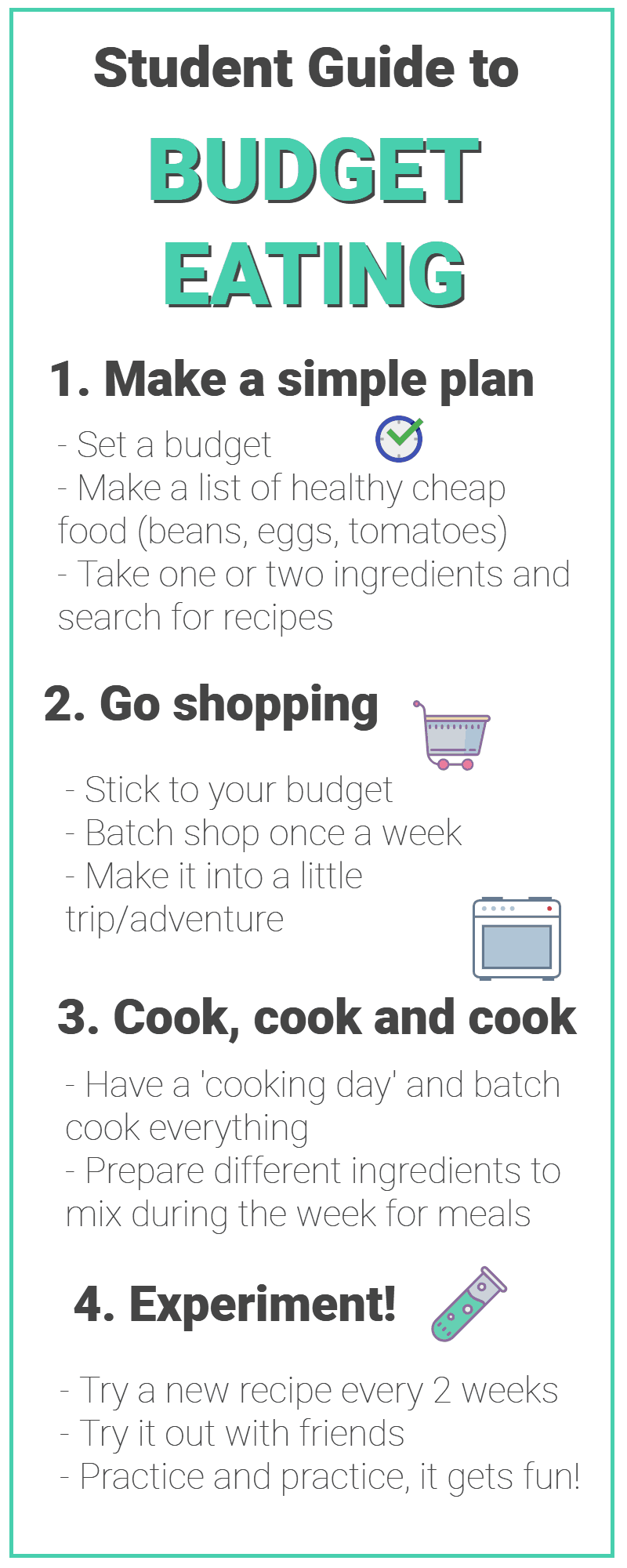
Some awesome advice there. Here’s an infographic to summarise it all up: